Loading
Premium AMD
AI Answering Machine & Call Screening Detection
ML-driven call classification that tells your dialer — in under three seconds — whether it reached a human, a voicemail, an IVR, or a phone that is screening the call on its owner’s behalf.
IQAAI builds premium answering machine detection engines that fuse neural voice activity detection, streaming ASR peeks, and per-frame class posteriors over human, machine, IVR, and screening. The engine detects iOS and Google call screening, tracks whether the real person takes over or the call falls through to voicemail, times message drops off the beep cue, and records every decision as a replayable event stream.
01
Connect agents to live humans faster while cutting time wasted talking to voicemail greetings.
02
Treat iOS and Pixel call screening as a first-class call state — with human takeover and voicemail fallthrough tracked automatically.
03
Audit and tune every classification from a full replay of waveform, posteriors, transcripts, and per-decode latency.
Capabilities
What We Build
ML Call Classification
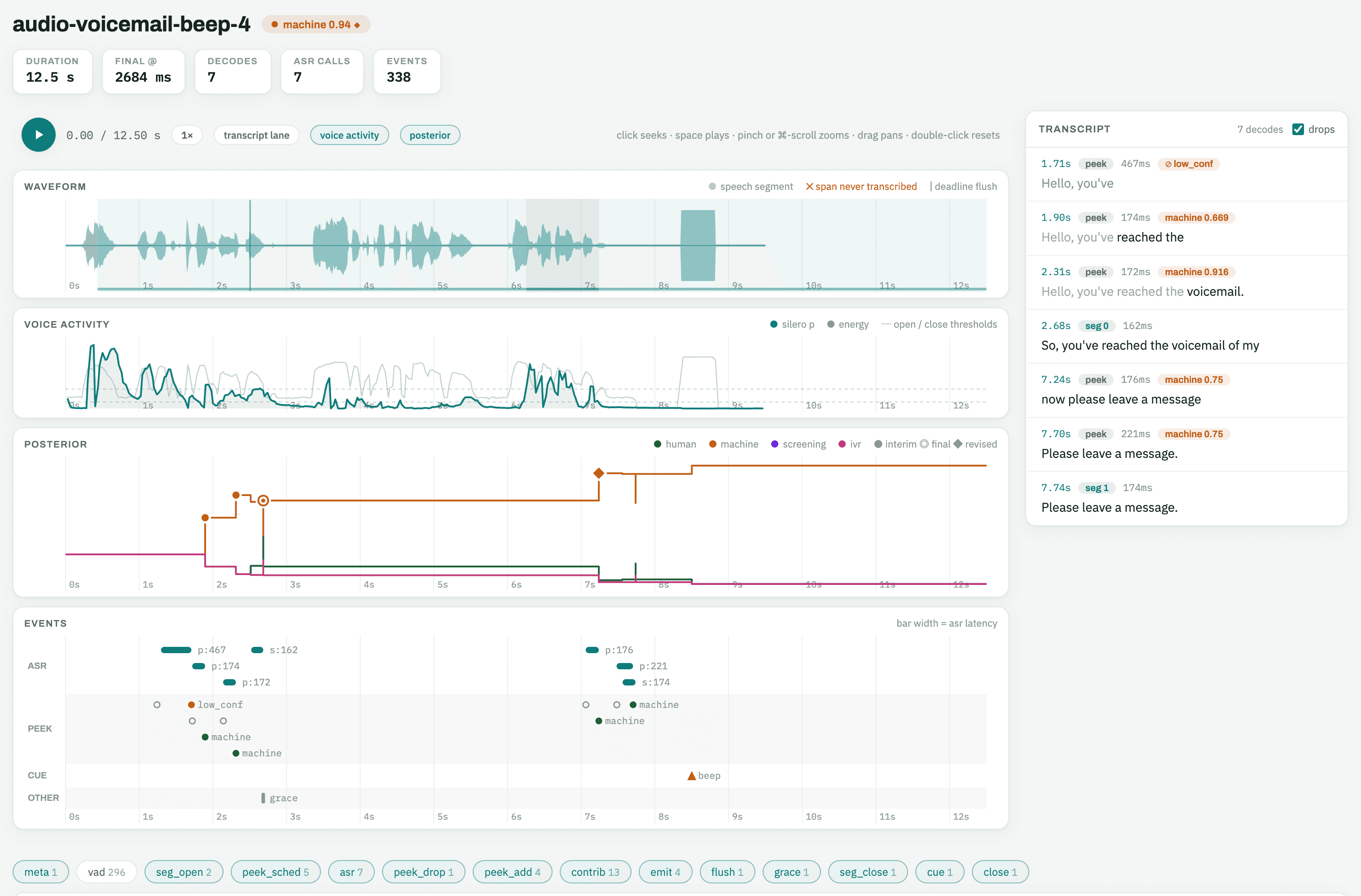
Neural VAD, low-latency streaming ASR peeks, and fused class posteriors produce interim, final, and revised decisions across human, machine, IVR, and screening — with obvious machines finalized in a few hundred milliseconds.
Call Screening & Takeover Detection
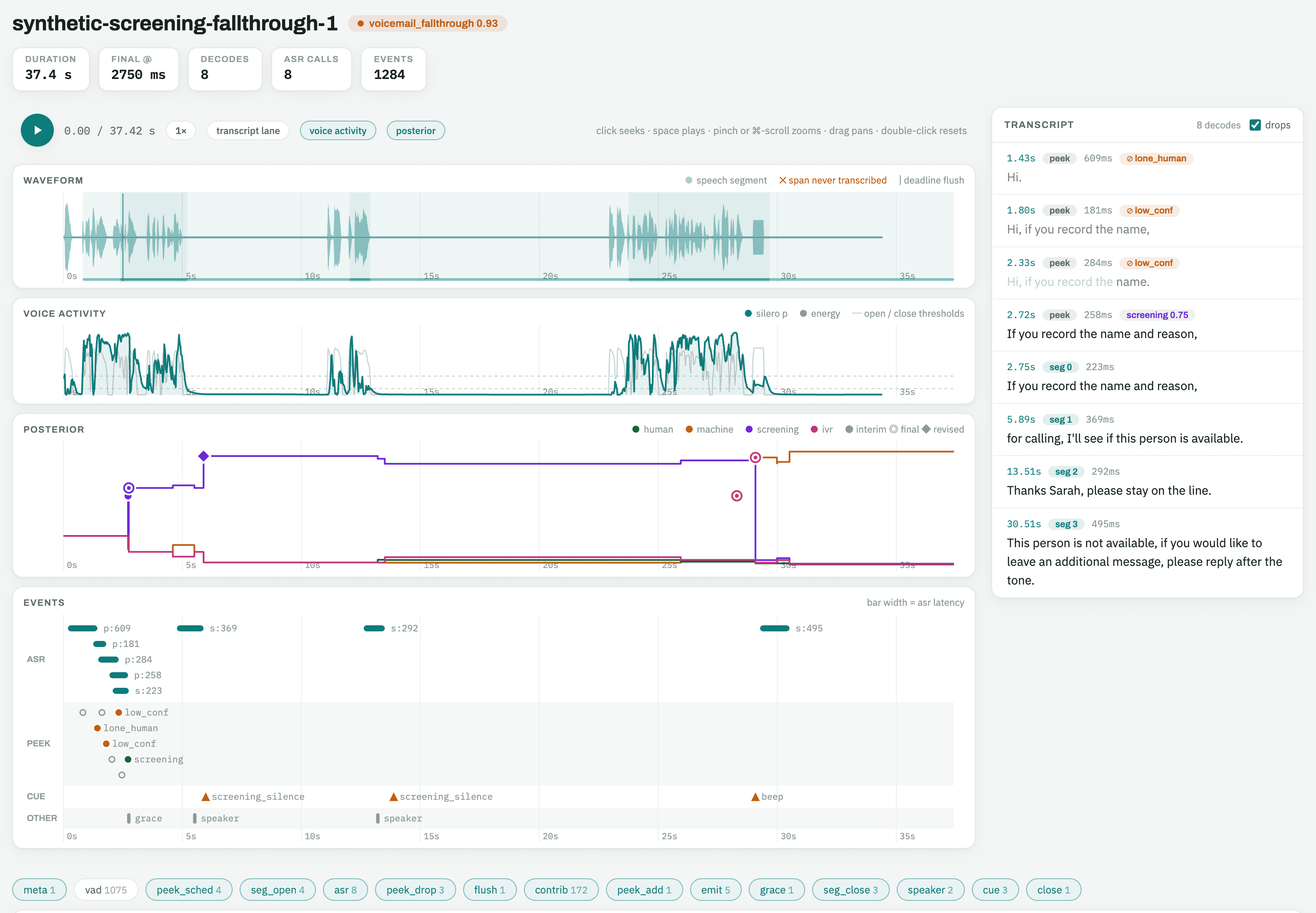
Detects iOS Call Screening and Google Call Screen prompts from the transcript itself, keeps the line alive through screening silence, then classifies the outcome: live human takeover or voicemail fallthrough.
Beep, Cue & Dialer Integration
Voicemail beep cues for precisely timed message drops, speaker-change and silence cues, and an event stream that plugs into predictive dialers, FreeSWITCH deployments, and voice AI agents.
Live Detector
Inside The Engine
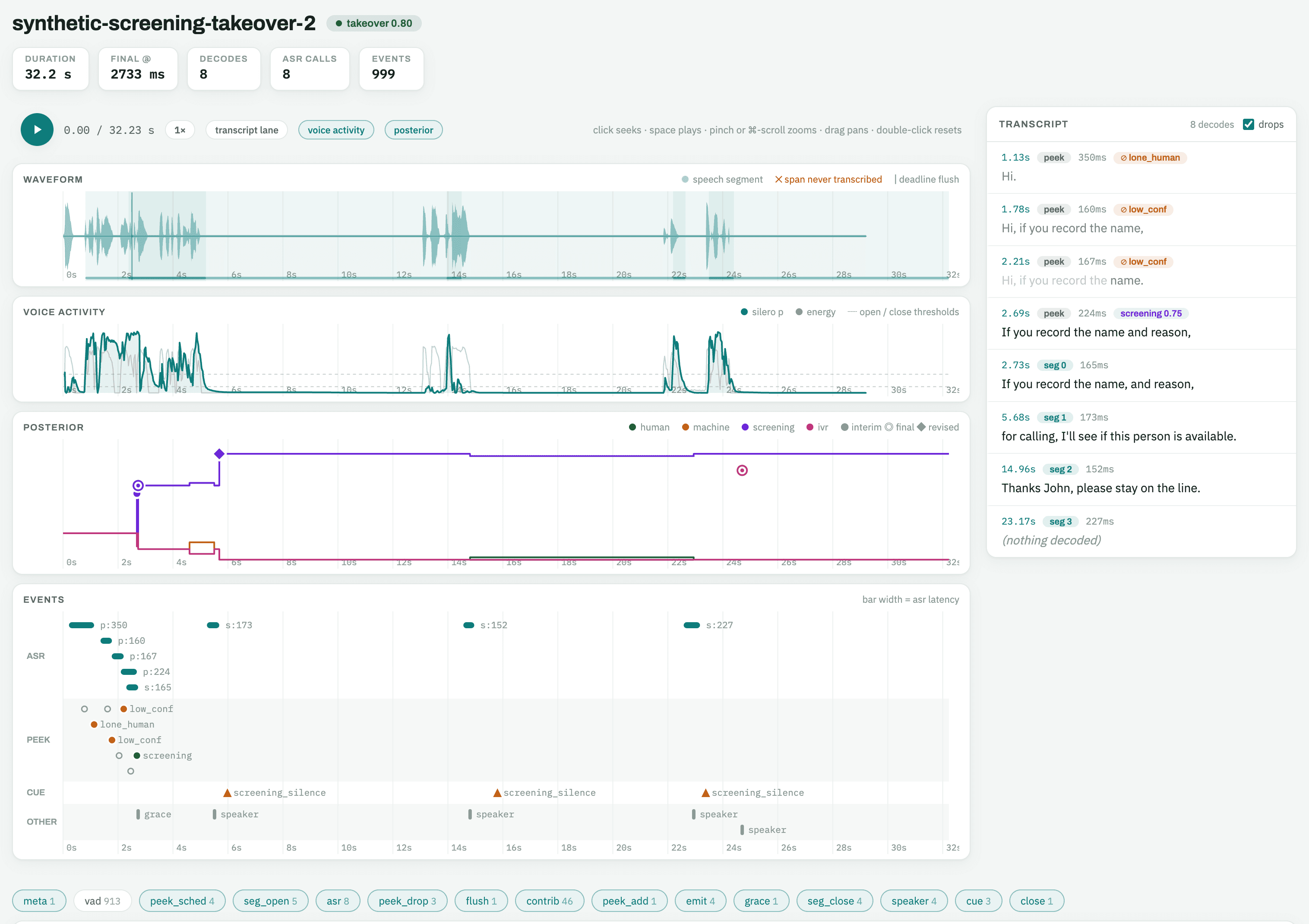
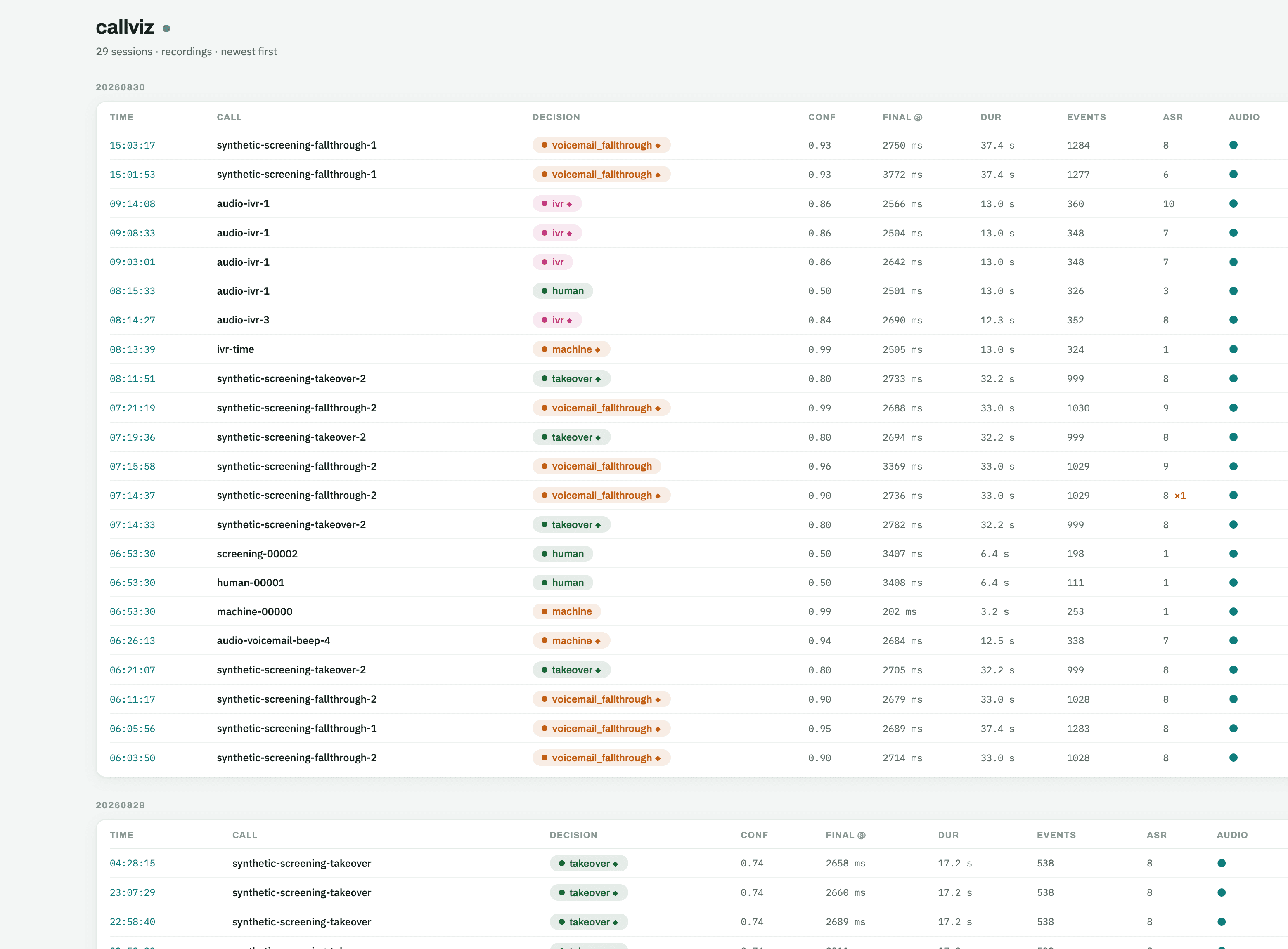
Real decisions from our call analysis console: waveform, neural voice activity, class posteriors, ASR decode latency, and the cue events behind every classification.
Foundation Stack
Technologies We Use
FreeSWITCHSilero VADStreaming ASRPythonPyTorchWebSocketsSIP/RTPRedis
How is ML-based AMD different from traditional answering machine detection?
Traditional AMD infers human vs machine from silence timing, greeting length, and energy bursts. Our engine listens to what is actually said: streaming ASR transcripts and neural VAD feed class posteriors that separate humans, voicemail greetings, IVRs, and call screening — and decisions can be revised as new evidence arrives.
Can you detect iOS Call Screening and Google Call Screen?
Yes. Screening prompts such as “if you record the name and reason for calling, I’ll see if this person is available” are detected within roughly 2.7 seconds, and the engine then tracks whether a real person takes over the call or it falls through to voicemail.
What happens when a human takes over after screening?
Speaker-change and screening-silence cues trigger a revised decision — the call is relabeled as a live human takeover so your dialer or voice agent can bridge an agent in, with the full screening transcript available as context.
Does it integrate with predictive dialers and existing FreeSWITCH infrastructure?
Yes. The detector runs against live media from FreeSWITCH or SIP/RTP taps and emits classification events over a socket in real time, so predictive dialers, Vicidial-class platforms, and voice AI agents can act on decisions immediately.
Next Step
Discuss Your Architecture
Bring your current platform, traffic model, latency constraints, and integration requirements. We will identify the practical path to production.